
The Asia Conference on Church and Mission 2026 (ACCM 2026) closed on Thursday with a renewed call for evangelical leaders in Asia to move disciple-making from conference language into concrete practice, as speakers reflected on biblical models of discipleship and urged participants to return home with a clear direction for action.
Held under the theme "Disciple or Die 3.0" in Metro Manila, the Philippines, from June 9 to 11, the gathering brought together about 210 church leaders, pastors, theologians, and mission practitioners to consider how the Asian Church can respond more intentionally to Jesus' call to make disciples. In the closing session, the emphasis shifted from defining discipleship to asking what kind of lives, churches, and leadership structures will actually form disciples.
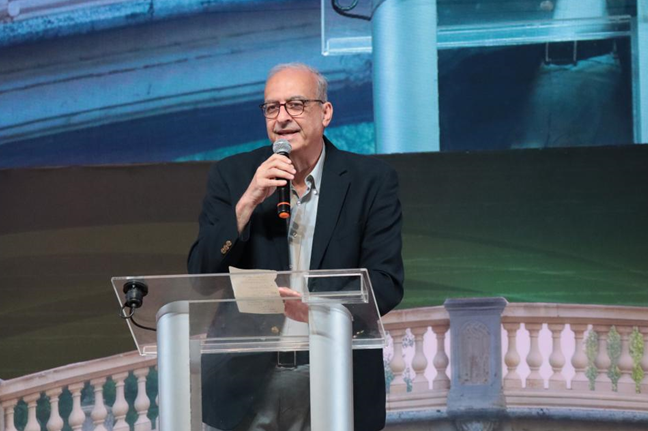
In the closing remarks, Rev. Adv. Botrus Mansour, secretary general of the World Evangelical Alliance, recalled the opening question raised by Bambang Budijanto, general secretary of the Asia Evangelical Alliance: "Where are we?" For Mansour, that question required each participant to locate themselves honestly in relation to the disciple-making task before them.
He revisited earlier messages on the good soil, the Gospel of Luke as a gospel of discipleship, and the repeated reminder that there is "no Plan B" to Jesus' command. Disciple-making, he said, ultimately comes down to obedience.
In discipleship, he said, believers first seek to be formed themselves and then help others come before Jesus. Such work requires leadership, but also a holistic vision of discipleship that reaches different places and relationships, including homes, children, women, and families.
He also emphasized that discipleship is not only an individual task but also a communal one. Referring to the day of Pentecost and to Jesus' life with the Twelve, Mansour said disciple-making takes place among a group of people who live and walk together. Recalling the image of being covered in the dust of the rabbi, he said believers are called to walk so closely with Jesus that they begin to resemble him.
Mansour welcomed the practical tools introduced during the conference, including a card intended to help participants monitor and move forward in disciple-making. He also referred to future programs and conferences designed to help churches take concrete steps.
At the same time, he cautioned against allowing conferences to become only memories or collections of name tags. Many leaders, he said, have attended numerous gatherings over many years and received much benefit from them, but the challenge is whether what they hear is translated into practice.
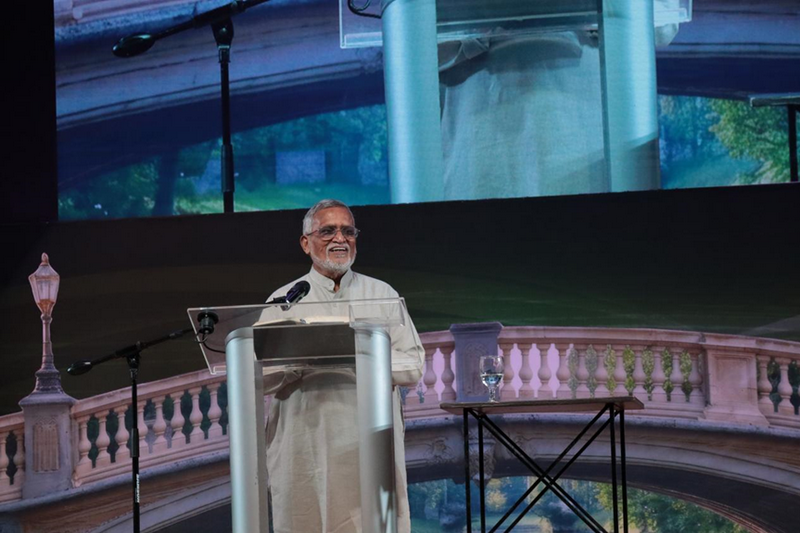
In a biblical reflection from Acts 20, Rev. C. B. Samuel, honorary theological adviser for Micah Global and EFICOR, turned to Paul's farewell address to the Ephesian elders, describing it as a model for leaders who want their lives to be remembered not merely for ministry activity, but for genuine disciple-making.
Samuel said discipleship should not be confused with mentoring or coaching. Discipleship is about helping people move toward where God wants them to be. Drawing from Paul's example, Samuel highlighted several key qualities of a discipler: transparency, genuine love and prayerful concern for others, holistic and relational ministry, focus on God's calling, watchfulness in preparing disciples for future challenges, and a life marked by integrity, hard work, and generosity.
Concluding his message, Samuel said he was not asking participants to write their farewell speeches, but to think seriously about what kind of disciplers they wanted to become. The conference, he said, was not only about defining discipleship but also about defining the direction participants would take after leaving.
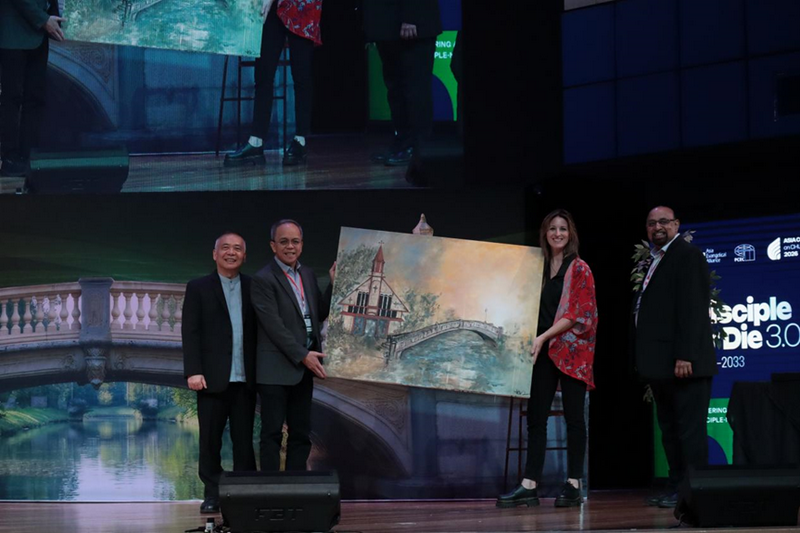
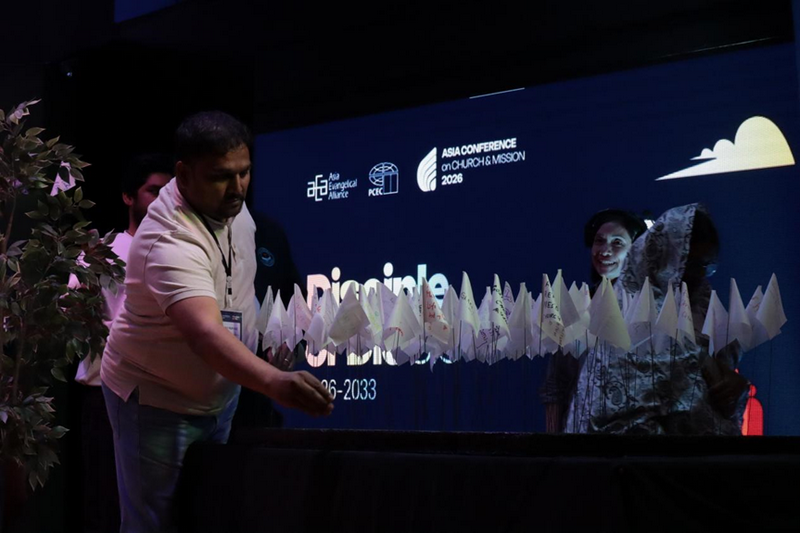
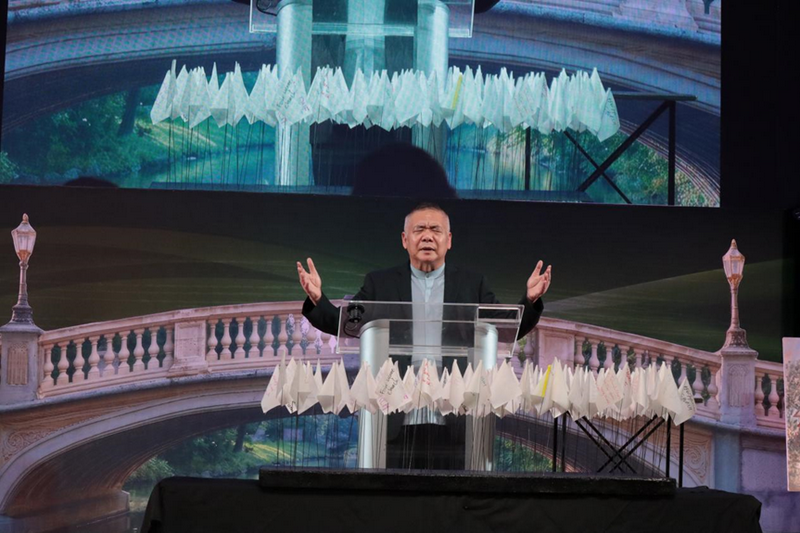
The closing session also included several symbolic acts of response. Organizers first presented an artwork depicting a church on one side of a bridge, representing the comfort zone in which many churches remain. The movement across the bridge symbolized the journey churches must make to become disciple-making churches.
Participants were then invited to make that call more personal and concrete. Each attendee received a small white flag and wrote on it the name of a church they hoped to see become a disciple-making church. One by one, they came forward and planted the flags together, forming a visible sign of shared commitment across different churches and countries. Bambang Budijanto then led a prayer, asking God to use the participants' resolve, bless the churches represented by the flags, and transform them into churches that actively make disciples.