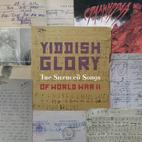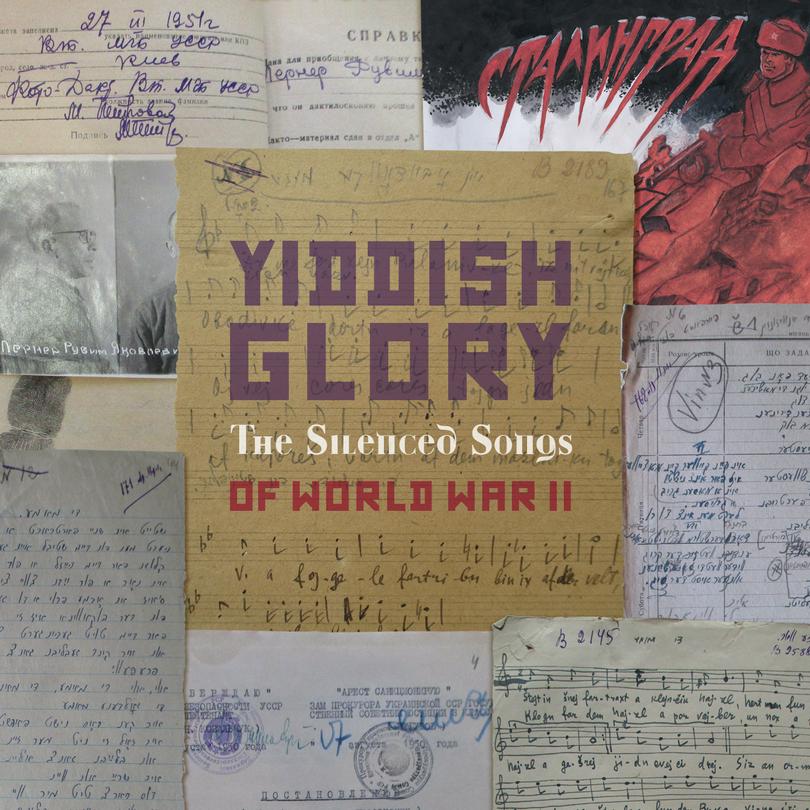
On August 18, 1950, ethnomusicologist Moisei Beregovsky was arrested for his work collecting Yiddish songs written during the Holocaust. Beregovsky's collection was confiscated, he was sent to the gulag for six grueling years, and died thinking these songs that described Nazi atrocities in Ukraine, Moldova and Poland were lost to history… until librarians in Kyiv rediscovered Beregovsky's collection in a former Soviet archive.
"Every song on this album is controversial," explains Anna Shternshis (University of Toronto), who created Yiddish Glory. "Some tell stories of illegal border crossings, others condemn fellow ghetto prisoners for corruption, while still others uncover stories of betrayal by former friends and neighbours who became prison guards instead of companions. Each song contains secrets, because singing them out loud could lead to jail sentences. Yet each song is also a testament to the fact that some people who lived through what they lived to, have simply refused to be silent."
This album is the result of 14 years of painstaking research, including Shternshis' expeditions across Europe, Central Asia, and through former Soviet archives, where she found the Komitet Gosudarstvennoy Bezopasnosti or Committee for State Security's records of how they interrogated and tortured Beregovsky.
This album is the result of 14 years of painstaking research, including Shternshis' expeditions across Europe, Central Asia, and through former Soviet archives, where she found the Komitet Gosudarstvennoy Bezopasnosti or Committee for State Security's records of how they interrogated and tortured Beregovsky.
"A Priest Was Murdered in Kalisz" documents the killing of a Polish priest named Roman Pawłowski on October 18th, 1939, in Kalisz, Poland. (Professor Shternshis travelled to Kalisz to verify the facts in the song).
This song is from the testimony of Leyb Diamant, a 37-year old Jew who managed to escape Kalisz to Cheboksary, Chuvashia. The song describes how the Nazis forced a group of Jewish teenagers to kill the priest in order to start a race riot, but because witnesses saw what actually happened, the pogrom never occurred, and Diamant managed to survive.
During World War II, approximately 2,000 Catholic priests, 370 friars, and 280 nuns were murdered by the Nazis. They are remembered every year on April 29, the anniversary of the liberation of the Dachau concentration camp, where 2,794 members of the Catholic clergy were imprisoned.
"A Massacre in Zhabokrych" - as the title suggests, describes a horrific massacre in Ukraine where only three Jews survived when the Nazis overran that town, while at the same time, after liberation, those survivors had to hide the fact that they were there as Stalin arrested survivors and accused them of collaborating with Nazis.
Yiddish Glory's tour in Asia will start in Seoul on May 6 and play in Beijing, Shanghai, and Hong Kong till May 15.