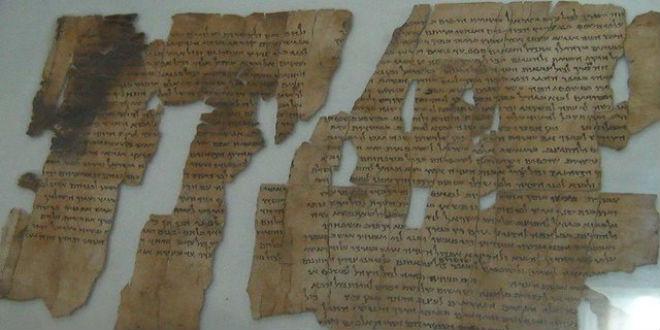
New discovery has been made wth regards to the content of some of the Dead Sea Scrolls after academics used the data from advanced imaging technology to decipher the new texts that was discovered within the scrolls.
According to reports, a researcher from the Israel Antiquities Authority was able to read the letters that are invisible to the naked eye as part of the project to digitize the scrolls found in the 1950s in Qumran. The script was discovered by scroll researcher Oren Ableman, who checked the fragments in Cave 11 near Qumran and discovered traces of ink in some of the fragments that cannot be seen easily with the naked eye.
His discovery, made public on Tuesday at the Hebrew University of Jerusalem where Ableman was studying, showcased that several fragments matched the script he discovered and even identified the manuscripts these fragments may be included in.
Tens of thousands of parchment and papyrus fragments were also discovered alongside the scrolls, some remains unsorted or deciphered. However, with the newest imagining technology developed for NASA, scientists can now determine the script used in some of the fragments discovered.
The IAA said that the identification of these new scripts provides new data for the study of the Dead Sea Scroll and it may lead to the discovery of an unknown manuscript.
According to the discover, the new fragments discovered came from the Books of Deuteronomy, Leviticus and Jubilees.
There is also a fragment which belongs to the Great Psalms Scroll, which preserved the beginning of Psalm 147:1. The discovery shows that the text for this Psalm is slightly shorter than the current text used for the verse.
Another fragment discovered contained letters in Paleo-Hebrew. The experts believe that it may belong to an unknown manuscript written in the language.