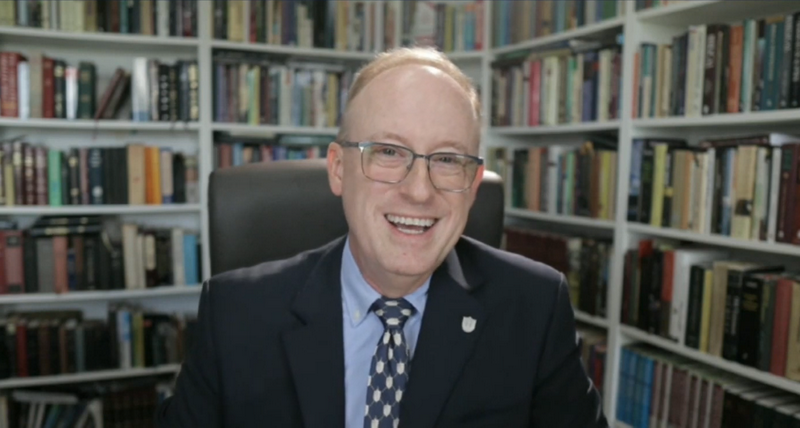

At a worship gathering in Hong Kong in 2007, U.S. Old Testament scholar Dr. Scott N. Callaham—who is married to a Chinese wife—was deeply moved by Chinese worship songs—even though he did not understand a word. The experience led him to learn Chinese, teach Hebrew in Chinese, and eventually write worship songs in a language that was not his own.
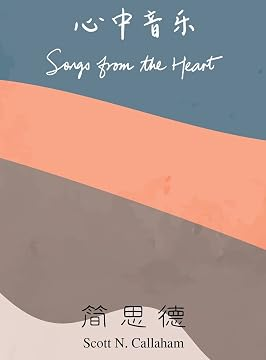
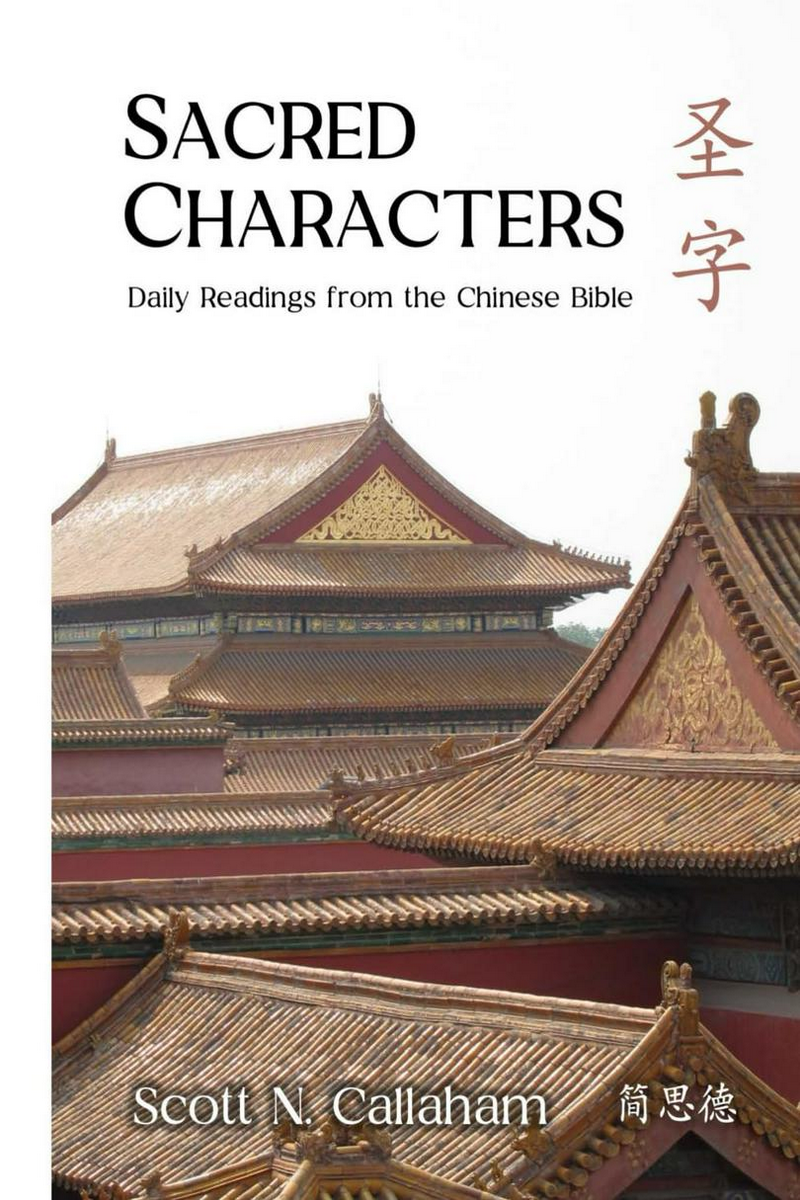
After studying full-time at Sichuan University and teaching at a seminary in Singapore, Dr. Callaham unexpectedly composed about 50 Chinese hymns. Eight of these were recorded with his students and released in the album Songs from the Heart (《心中音乐》). In addition to his music, he is the author of Sacred Characters: Daily Readings From the Chinese Bible (《圣字》) and several scholarly works on biblical languages.
Callaham has served as the dean of the Institute of Public Theology at Covenant Baptist Theological Seminary and is the lead editor of World Mission: Theology, Strategy, and Current Issues, as well as the author of Biblical Aramaic for Biblical Interpreters, which are available in both English and Chinese. He also hosts the Daily Dose of Aramaic podcast.
In an exclusive interview with China Christian Daily, Callaham spoke about his calling to serve the Chinese church, writing worship songs in Chinese, reading the Bible across languages, and what he learned from Chinese seminary students.
'When I Use Chinese to Teach Hebrew'
Callaham's connection with the Chinese-speaking church began unexpectedly. In 2007, while visiting his wife's family in Hong Kong, he was invited by his younger sister-in-law to a fellowship group at her church. Expecting perhaps 15 people, he found himself among about 200.
At the time, Callaham knew no Chinese. Someone translated the spoken portion of the gathering for him, but the songs were different. "You don't translate a song while it is being sung," he recalled. From the beginning of the singing to the end, he experienced an intense emotional response. What surprised him was that he did not understand the content of the songs.
"In the days that followed, I thought about it, prayed about it, and searched the Scriptures," he said. He gradually came to understand the experience as a calling: his background as an Old Testament scholar, he believed, could be used to serve the Chinese-speaking church in Asia, particularly through Mandarin.
He then set what he considered an almost impossible goal: "When I use Chinese to teach Hebrew, that is when I will know I am fulfilling this calling."
Several years later, that goal became reality. At that time, Callaham's wife was undergoing treatment for a serious brain tumor. "We could not move to make changes. Two years later, we would like to have another child, so she had an operation, but there was left a part that grew again." He said, "After my wife got pregnant, we received a phone call from her doctor who said that the tumor was gone."
Callaham described the moment as similar to Moses encountering God at the burning bush. They felt that they should go to China as soon as possible, and he resigned from his ministry position.
From 2012 to 2015, he became a full-time Chinese student at Sichuan University in Chengdu, where it was more affordable than going to Beijing or Shanghai. His years there coincided with a period of rapid growth in the university's international enrollment—Sichuan University's international student body grew from 1,777 in 2011 to 3,134 by 2016, according to the university's own figures.
"Every day was a mental workout," he said. His teachers knew why he was learning Chinese. He told them that his goal was to go to Singapore and use Chinese to teach Hebrew and the Old Testament. Even when public holidays resulted in Sunday makeup classes, he told his teachers that he would not attend because he was going to worship.
Callaham remains grateful to his professors. He was older, married, and already had a PhD, while many of his classmates were young university students from around the world. He found other unexpected comforts in Chengdu, too: "I knew God had me in the right place the first time I had shuizhuyu (Sichuan boiled fish). I love spicy food, and I have not had it as good as I did in Chengdu!"
Then, in 2016, he stood in front of his first Hebrew class in Singapore. There were about 25 students, all from China. He told them that nine years earlier, God had radically reshaped his life toward the goal of serving the Chinese church in Asia. The goal he had once considered impossible had become part of his everyday ministry.
When an Old Testament Scholar Started Writing Chinese Songs
Callaham did not go to Singapore intending to become a songwriter. He had never planned to write Chinese worship songs, and he did not consider himself a professional musician.
The first song came after his first year in Singapore, while he was vacationing in Venice. He was rowing a boat and thinking about his students in Singapore, his growing ability in Chinese, and the challenge of teaching them Hebrew exegesis.
"Suddenly, a song started coming into my mind, and it had Chinese words," he recalled. He had never heard the song before, so he wrote it down.
Back in Singapore, he gave it to one of his students who played piano. As she played, another student came over, looked at the lyrics, and corrected some of his grammatical errors. "I thought that would be the only song," he said. But more songs continued to come. Eventually, he wrote about 50.
Sometimes the process was as simple as walking down the street for lunch, opening his Chinese Bible, and reading a Psalm. He might notice that part of the text happened to rhyme. As he continued reading, music would begin to fit the Psalm. The songs, he said, emerged from the ordinary rhythm of his ministry: teaching God's Word, worshiping, and living alongside his students. "It was all one piece."
Theology That Can Be Sung
As an Old Testament scholar, Callaham sees no necessary conflict between theological depth and emotional expression in worship. "We have an entire book of songs—the Psalms," he said. Poetry can be written or spoken, but music allows people to express some of the deepest feelings of their hearts.
At the same time, he is concerned that much contemporary worship music can be biblically light, overly emotional, or focused more on the individual than on God. "The songs in Songs from the Heart came out of teaching God's Word," he shared. During the week, he was teaching Hebrew, Aramaic, the Old Testament, and biblical theology. He and his students also worshiped together in chapel. "The musical inspiration simply overflowed from that life," he said, "So I didn't feel that theology and emotion were competing with each other."
Callaham described the songs as hymns containing biblical and theological ideas—some explore the Trinity, while others develop theological ideas through the structure of their verses.
"In my heart, I hear 100 Chinese voices singing congregationally," he said. The songs are not primarily intended for professional singers—he deliberately wrote them within a vocal range that both men and women could sing.
His hope is that Chinese churches around the world will use the songs in worship, and, through them, see themselves as part of "a worldwide family" of people who worship Jesus.
A Song Shaped Across Borders
One of the songs, "Who Am I," shows another dimension of Callaham's experience. "It is autobiographical," he said. "It is my prayer to God expressed in Chinese, and it also reflects language from the Psalms."
Although the song began with Callaham's Chinese words, its recording became an international collaboration.
The recording itself became an international collaboration. The musician responsible for the harmonization was an ethnic Chinese musician in Indonesia who did not understand Chinese; Callaham explained the meaning and emotion of the song, and the musician worked out the musical elements. During the COVID period, when time was limited, backup singers from a Chinese church in Indonesia were brought into the project. People in Singapore also participated, including one of Callaham's former students, who served as the female lead singer for most of the album. In the end, students from China, musicians and singers in Singapore and Indonesia, and Callaham himself all became part of the project.
For Callaham, this collaboration also reflects something important about the songs themselves. Although the initial lyrics came to him in Chinese, his students often helped him correct grammar or make expressions sound more natural—sometimes an expression he was confident was perfect turned out to need substantial correction. He sees that process not as a weakness of the project but as part of it: collaboration behind the scenes, he said, so that the songs could express worship in ways that Chinese Christians would naturally understand.
Learning the 'Christian Chinese' Language
Callaham's experience of learning Chinese also led to another project: Sacred Characters: Daily Readings From the Chinese Bible, a devotional with a short reading for every day of the year, often centered on a verse from the Chinese Union Version. The book is written in English for English speakers who are learning Chinese for Christian purposes.
The idea came from Callaham's own experience. There are many resources for learning everyday Chinese, he explained, but Christian ministry requires another layer of language—biblical and theological vocabulary, and the particular ways Christians speak about their faith. "I had to learn much of that through trial and error," he said.
The book is also intended for people in Chinese churches whose primary language is English but who want to participate more fully in the Chinese worship life of the church. They may have intermediate Chinese but are unfamiliar with "Christian Chinese." Each reading includes pinyin and notes specifically tailored to the needs of a Chinese learner.
Reading the Bible Beyond English
Callaham's work with Hebrew and Aramaic has also shaped his thinking about Chinese Bible translation. For him, the starting point is clear: the original biblical languages, rather than English or Chinese, are the standard. That perspective, he said, helps explain why differences sometimes exist between the Chinese Union Version and more recent Chinese translations.
Callaham welcomes modern Chinese translations produced by native Chinese speakers who have studied Hebrew, Aramaic and Greek and translate directly from the biblical languages. He also cautioned against using an English translation as the standard for evaluating a Chinese one: "We should never use an English translation, such as the English Standard Version, as the standard by which to judge a Chinese Bible translation," he said. "The English Bible is itself a translation."
For Callaham, learning Chinese also changed the way he himself reads the Scripture. Because Chinese is not his first language, he has to slow down when reading the Chinese Bible, and that slower pace, he said, sometimes leads him to notice things he might otherwise skim over in English. Today, he carries a bilingual Bible with him and sometimes reads the Chinese text even in an English-language worship service. He describes Chinese as having become one of his "heart languages" of worship—a language through which singing, Scripture reading and worship connect him particularly with the Chinese church and his former students.
'More than a Classroom'
Having taught both Chinese and American seminary students, he observes that there are many similarities, but there are some differences. For example, students in the United States "sometimes don't have such a clear mission from a church about what they will do afterward," but most Chinese students were sent from their churches to Singapore, and they will return to serve them when back in China. Another difference is that Chinese students are very good at memorization. "When learning biblical languages, you need vocabulary in your mind. English-speaking students often have to be convinced of the importance of memorizing vocabulary, but my Chinese students were generally very strong in this area," he said.
"I also sensed a seriousness among many of them. Christianity is rarer in China than in the United States, and I think that cultural setting contributed to a level of seriousness that was very encouraging to me," he added.
But he was careful not to draw a sharp line between Chinese and American students. "People are people everywhere," he said. "We are all sinful human beings."
What remains with him most deeply is not a comparison between the two groups, but his relationships with individual students. "I taught them, prayed with them, corrected them, and encouraged them," he said. "Now I continue to cheer them on in their ministries."
Serving the Chinese Church With God-given Love
When Callaham thinks about the needs of the Chinese-speaking church in Asia, "it often brings me to tears."
Some people assume that his connection with the Chinese church comes from his wife, who is from Hong Kong, but Callaham says the calling came years after they were married, and Mandarin is not even her native language.
He describes his love for the Chinese church as something God gave him. "It does not come from me," he said, "but it is one of the most significant aspects of my life." He traces the beginning of this experience to the time when he was about 40 and finally went to China.
"This is divine impartation; God gave me this supernatural love for the Chinese church."
"When I open the Chinese Bible, when I use Chinese to worship—whether in prayer, singing, or teaching—and when I try to help Chinese people understand the Bible better, it is very much an act of returning worship to God for this amazing love gift he has given me for the Chinese church," he added.
"It is very much an act of returning worship to God for this amazing love gift he has given me for the Chinese church," he said. In that sense, the songs, his academic work, and Sacred Characters are not separate projects. "They all have a ministry story behind them," he said. "They are not arbitrary projects. The whole purpose is to serve the Chinese church."
At the close of the interview, Callaham offered a blessing to Christians in mainland China: "Now I ask God to bless you, to bring you back to His precious Word, because God's Word tells us that the Bible is authoritative and also involves conflict and is the source of our life. I ask God to use every level of your life through Scripture to glorify Jesus Christ, our only hope."