Hudson Taylor's great-great-grandson revisited the missionary's life through four themes beginning with the letter P: passion, practice, provision, and partnership, calling today's church to a renewed commitment to cross-cultural, cross-denominational mission.
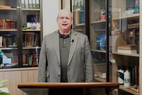
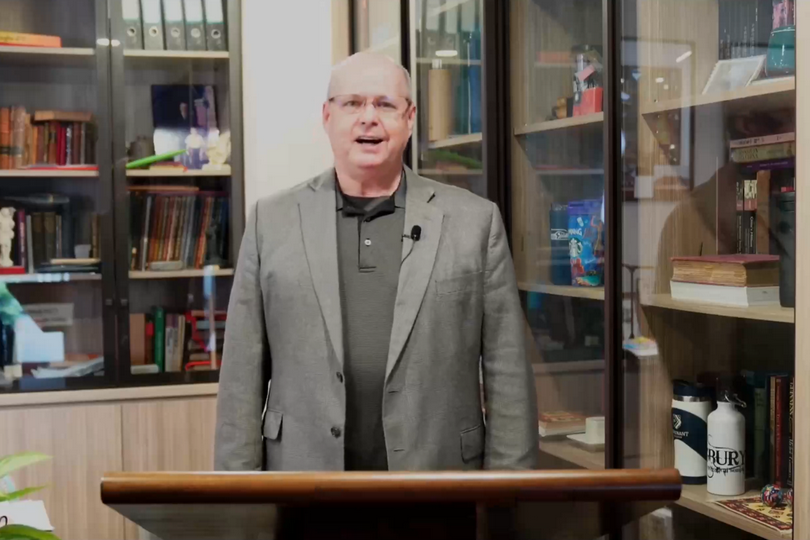
Rev. Dr. James Hudson Taylor IV, also known as Jamie Taylor, spoke at a September 23 online gathering co-hosted by the World Evangelical Alliance (WEA) and the World Chinese Christianity Alliance (WCA).
The event, themed "From Legacy to Horizon: Learning from Pioneers, Mobilizing for 2033," marked the WEA's 180th anniversary and looked ahead to the 220th anniversary of Protestant missions in China in 2027. Taylor's presentation formed part of a segment on three early missionaries to China, alongside Robert Morrison and Dr. L. Nelson Bell.
WCA General Secretary Rev. Ezekiel Tan introduced Taylor as carrying his family's "multi-generational torch of love for the Chinese people."
Taylor said he and his wife had served for six years at China Evangelical Seminary in Taiwan in partnership with OMF International, the successor to the China Inland Mission (CIM) founded by his ancestor. He took John 9:4 as his foundational text: "As long as it is day, we must do the work of him who sent me. Night is coming, when we can no longer work."
Hudson Taylor was born in Barnsley, England, in 1832, to a devout family; his father was a Methodist lay preacher, and the family's connection to Methodism traced back to his great-grandfather's conversion under Wesleyan preaching. Converted at 17, Taylor sailed for China at 21, arriving on March 1, 1854, and beginning more than 50 years of missionary service. He founded CIM in 1865.
The first of Taylor's four themes, passion, referred to Hudson Taylor's burden for China's roughly 300 million people, most of whom lived far from the coastal areas where missionaries of that era concentrated. He often described them as "racing to a Christless eternity."
He illustrated that urgency with a story from early in Hudson Taylor's ministry near Ningbo. After preaching one afternoon, a young man asked him how long the gospel had been in England. Told it had been there for centuries, the man, whose father and grandfather had searched for truth in animism, Buddhism, Daoism and Confucianism without finding it, replied, "Why have you taken so long to come?"
The second theme, practice, centered on Hudson Taylor's insistence on contextualization. Where most missionaries of his era lived in separate "missionary compounds," Taylor chose to live among the Chinese, a decision that drew mockery at the time but became a defining practice of the CIM after its founding. Taylor learned Mandarin as well as Shanghainese and the Ningbo dialect, and, together with other missionaries, helped translate the New Testament into the Ningbo dialect, a copy of which Jamie Taylor said he keeps on his own bookshelf.
Taylor also adopted Chinese dress, growing a queue and eventually requiring all CIM missionaries to exchange Western clothing for Chinese dress upon arrival, a step Jamie Taylor called even more radical than living among the Chinese, one that let missionaries "take off some of the foreignness of the good news of Jesus Christ."
The third theme, provision, pointed to Taylor's reliance on God to fund the mission's work. Two watchwords of the CIM were "Jehovah Jireh" and "Ebenezer," reflecting the conviction, in Taylor's words, that "God's work, done in God's way, will never lack God's provision."
Jamie Taylor recalled that his ancestor said he was not concerned about a lack of money, but rather a lack of missionaries, trusting that God would provide for whatever workers he called.
The fourth theme, partnership, traced to the CIM's founding on June 25, 1865, when Hudson Taylor, after a Sunday service in Brighton, recommitted himself to the Lord and, days later, opened a bank account for the new mission with 10 pounds. The CIM recruited missionaries across denominational lines and, eventually, from England, continental Europe, North America, Australia and New Zealand.
Jamie Taylor connected that history to today's global mission partnerships between Western churches and the "majority world" of Asia, Africa and Latin America, summarizing the spirit of such partnership in a phrase he said captures it well: "it is not about ego, it is not about logo, and it is not about silo," but about believers "united in partnership in the furtherance of the gospel," as Paul writes in Philippians 1.
Jamie Taylor closed by noting that September marks not only the WEA's 180th anniversary but also the 160th anniversary of the arrival of Hudson Taylor and 16 CIM missionaries in China, on Sept. 30, 1866. He prayed that the spirit that moved the early missionaries would "stir our hearts afresh today," renewing passion for evangelism, practices of cultural identification, trust in God's provision, and partnership across the global church "as long as it is day."